The biggest challenge in modern aquaristics—whether you are maintaining a high-end SPS coral reef or a heavily stocked African Cichlid tank—is the management of the final stage of the nitrogen cycle: Nitrate (NO3). While traditional filtration excels at converting toxic ammonia and nitrite into nitrate, the process often stops there, leading to algae outbreaks and stunted livestock growth.
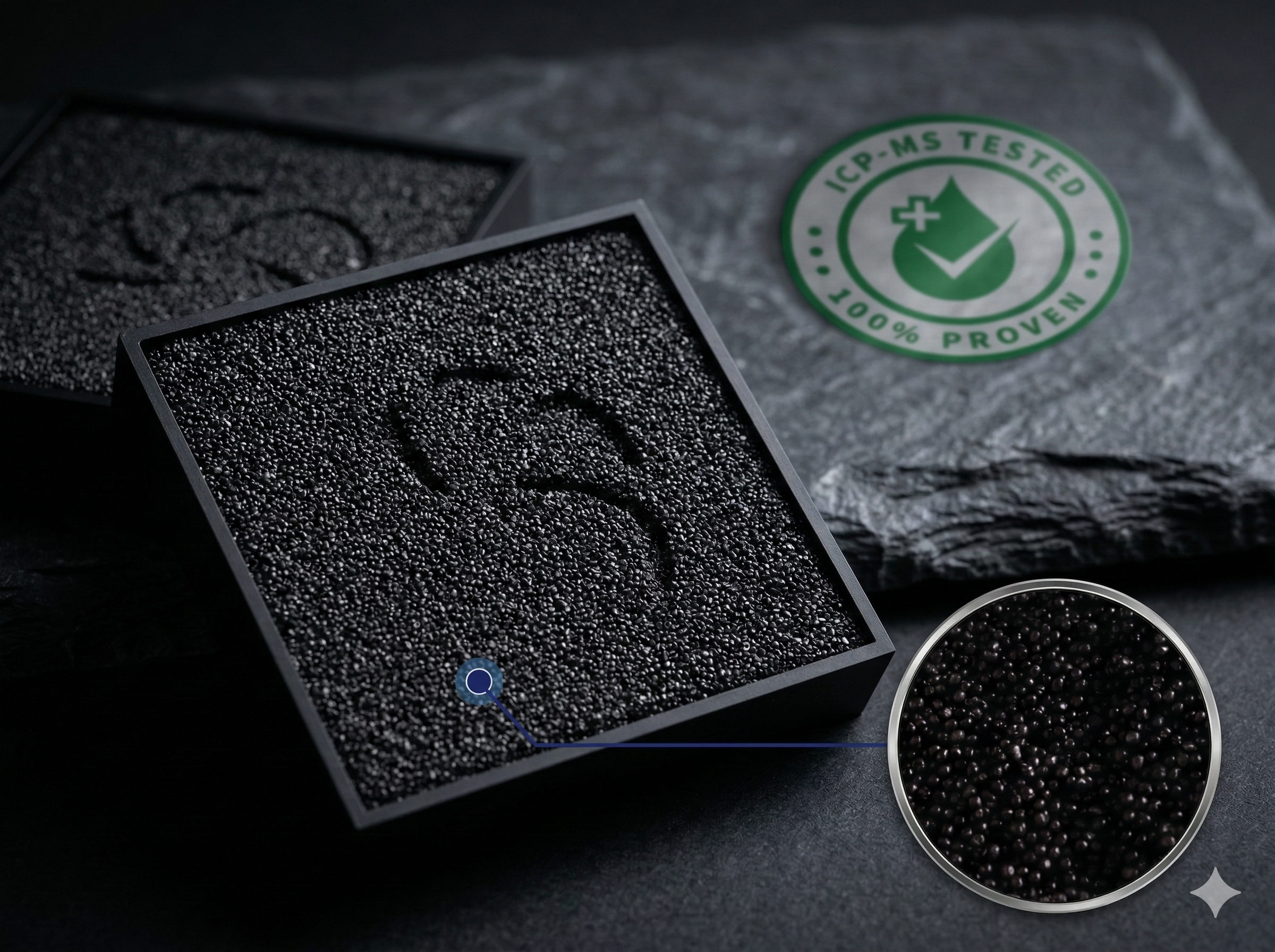
The Maxspect Nano-Tech Anaerobic Block represents a significant leap in bio-media technology. It is specifically engineered to bridge the gap between mechanical filtration and complete biological nutrient export by fostering anoxic environments where denitrifying bacteria can thrive.
Shutterstock
Understanding the Science: Why Anaerobic Media?
To appreciate the value of the Maxspect Anaerobic Block, one must understand the difference between Aerobic and Anaerobic (or more accurately, Anoxic) filtration.
The Aerobic Limitation
Most bio-media, such as ceramic rings or plastic bio-balls, are designed for high-flow areas. They are covered in oxygen-rich water, which supports Nitrosomonas and Nitrobacter bacteria. These “nitrifiers” convert ammonia to nitrite and then to nitrate. However, because these surfaces are saturated with oxygen, the bacteria that “eat” nitrate cannot survive there.
The Anoxic Solution
Denitrification—the process of turning Nitrate (NO3) into harmless Nitrogen gas (N2)—only occurs in environments where oxygen levels are extremely low (below 0.5 to 1.0 mg/l). In nature, this happens deep within the porous structure of live rocks or several inches deep in sand beds.
Maxspect Nano-Tech Anaerobic Blocks replicate this natural phenomenon in a compact, synthetic form. By using a proprietary arrangement of ceramic beads, these blocks restrict oxygen penetration to their core, creating a permanent “sanctuary” for anaerobic bacteria.
Technical Specifications and Composition
Maxspect has utilized advanced material science to ensure these blocks outperform traditional media.
| Feature | Specification |
| Material | Sintered Ceramic Beads (Proprietary Blend) |
| Porosity | Ultra-high Micro-porosity |
| Surface Area | ~2,150 m² per Block |
| Treatment Capacity | 1 Block per 1,000 Liters (approx. 264 Gallons) |
| Dimensions | 10cm x 10cm x 2.5cm per Block |
| Compatibility | Freshwater and Marine/Reef Aquariums |
Sintering Technology
The blocks are manufactured through a process called sintering. Tiny ceramic beads are heated to a point where they fuse together without melting into a solid mass. This leaves a labyrinth of interconnected microscopic tunnels. Unlike standard “foamed” ceramic, these sintered beads create a more stable and less “cloggable” environment for long-term bacterial colonization.
Application: Saltwater vs. Freshwater
A common misconception is that specialized bio-media is only for marine reef tanks. The Maxspect Anaerobic Block is equally effective—and often more necessary—in freshwater settings.
In the Marine/Reef Aquarium
In reef tanks, low nitrates are critical for the coloration and health of Acropora and other Small Polyp Stony (SPS) corals. High nitrates inhibit calcification.
- Live Rock Replacement: These blocks allow for “minimalist” aquascaping. You can have less rock in the display tank for better flow while maintaining superior biological filtration in the sump.
- Carbon Dosing Synergy: If you practice carbon dosing (using ethanol or vinegar), these blocks provide the ideal “home” for the resulting bacterial blooms to settle and consume nitrate.
In the Freshwater Aquarium
Freshwater enthusiasts, particularly those keeping Large Cichlids, Discus, or Goldfish, struggle with rapid nitrate accumulation due to high feeding rates.
- Water Change Reduction: By biologically removing nitrate, the frequency of massive water changes can be reduced, leading to more stable water parameters.
- Plant Health: While plants consume some nitrate, an overabundance can lead to “Black Brush Algae” (BBA) and other nuisance growths that the Maxspect blocks help suppress.
Installation and Placement Strategies
How you place the Maxspect Anaerobic Block determines its efficiency. Because it relies on creating a low-oxygen zone, placement is a strategic decision.
Option 1: The “Passive” Sump Placement
Place the blocks in a low-flow area of your sump, ideally after your mechanical filtration (filter socks or rollers) and protein skimmer.
- Pro: Very low maintenance.
- Con: It may take longer (4-8 weeks) for the anoxic zones to fully establish.
Option 2: The Stacked Method
Stack two or more blocks together. The center of the stack will become anoxic much faster because the outer layers “consume” the oxygen before it reaches the core.
Expert Tip: Place the blocks vertically rather than horizontally if you have high sediment in your water; this prevents “detritus settling” on the surface, which could clog the pores.
Option 3: Integration with Carbon Sources
Maxspect recommends using these blocks in conjunction with a carbon source if nitrate levels are exceptionally high. Some users place a “slow-release” carbon catalyst between two blocks to “fuel” the denitrifying bacteria directly at the site of colonization.
Maintenance: Protecting Your Bio-Investment
One of the few ways to “break” the effectiveness of these blocks is through clogging. If the microscopic pores are filled with fish waste (detritus), oxygen cannot be regulated, and the anaerobic bacteria will die.
- Mechanical Pre-filtration is Mandatory: Never place these blocks before your mechanical filtration. They should always be in the “clean” section of your filter or sump.
- Rinsing: Every 3 to 6 months, gently rinse the blocks in a container of aquarium water (never tap water, as chlorine will kill the bacteria). Gently shake the block to dislodge any surface silt.
- Staggered Cleaning: If you use multiple blocks, never clean them all at once. Clean one, then wait a month to clean the next to preserve the biological stability.
Comparison: Maxspect Anaerobic Blocks vs. Competitors
| Media Type | Pore Structure | Anoxic Potential | Lifespan |
| Maxspect Anaerobic | Sintered Beads (Controlled) | Very High | Long (3-5+ years) |
| Standard Bio-Balls | External Only | None | Indefinite |
| Live Rock | Random/Natural | Moderate | Variable |
| Ceramic Rings | Large/Open | Low | Moderate (clogs easily) |
The primary advantage of the Maxspect system is density control. While a standard “Bio-Block” is designed to be as porous as possible to let oxygen in, the “Anaerobic Block” is specifically calibrated to limit that flow just enough to let the center run out of oxygen.
Research and Fact-Checking: What to Expect
It is important to manage expectations based on biological reality.
- The “Curing” Period: Bacteria do not grow overnight. You will likely see no change in nitrates for the first 3 weeks. Peak efficiency usually occurs at the 10-12 week mark.
- Nitrate “Floor”: Biological filtration rarely brings nitrate to absolute zero in a heavily stocked tank. It is a tool for reduction and stabilization, not a total replacement for water chemistry management.
- Hydrogen Sulfide (H2S) Risk: Some aquarists fear that anaerobic zones create toxic H2S (rotten egg smell). This is highly unlikely with Maxspect blocks because they are not deep enough or “stagnant” enough to reach the true anaerobic state required for H2S production; they operate in the Anoxic range, which is safe.
Common Questions (FAQ)
Can I use these in a Hang-On-Back (HOB) filter?
Yes, provided the filter is large enough to submerge the block completely. If the block is partially exposed to air, it will act as a standard aerobic filter and will not remove nitrate effectively.
How many blocks do I actually need?
While the rating is 1 block per 1,000 liters, this assumes a “standard” bioload. If you have a predator tank or a heavily fed reef, doubling the recommended amount (2 blocks per 1,000 liters) is a safer approach to ensure the nitrogen cycle is fully closed.
Do they affect pH?
Maxspect Nano-Tech media is chemically inert. It will not leach minerals or affect the KH (Carbonate Hardness) or pH of your water, making it safe for delicate shrimp or acidic-water South American species.
Strategic Summary for the Modern Aquarist
The Maxspect Nano-Tech Anaerobic Block is not just “more rocks” for your sump. It is a specialized tool designed to solve a specific chemical problem. By providing a dedicated, high-surface-area home for denitrifying bacteria, it addresses the most persistent pollutant in closed aquatic systems.
- Key Value: Massive surface area in a tiny footprint.
- Versatility: Works in all water types and filter configurations.
- Efficiency: Specifically targets NO3 reduction through anoxic tunneling.
If you are looking to reduce the “Nitrate Creep” that plagues mature aquariums, or if you want to run a system with minimal live rock without sacrificing biological stability, these blocks are a premier choice.